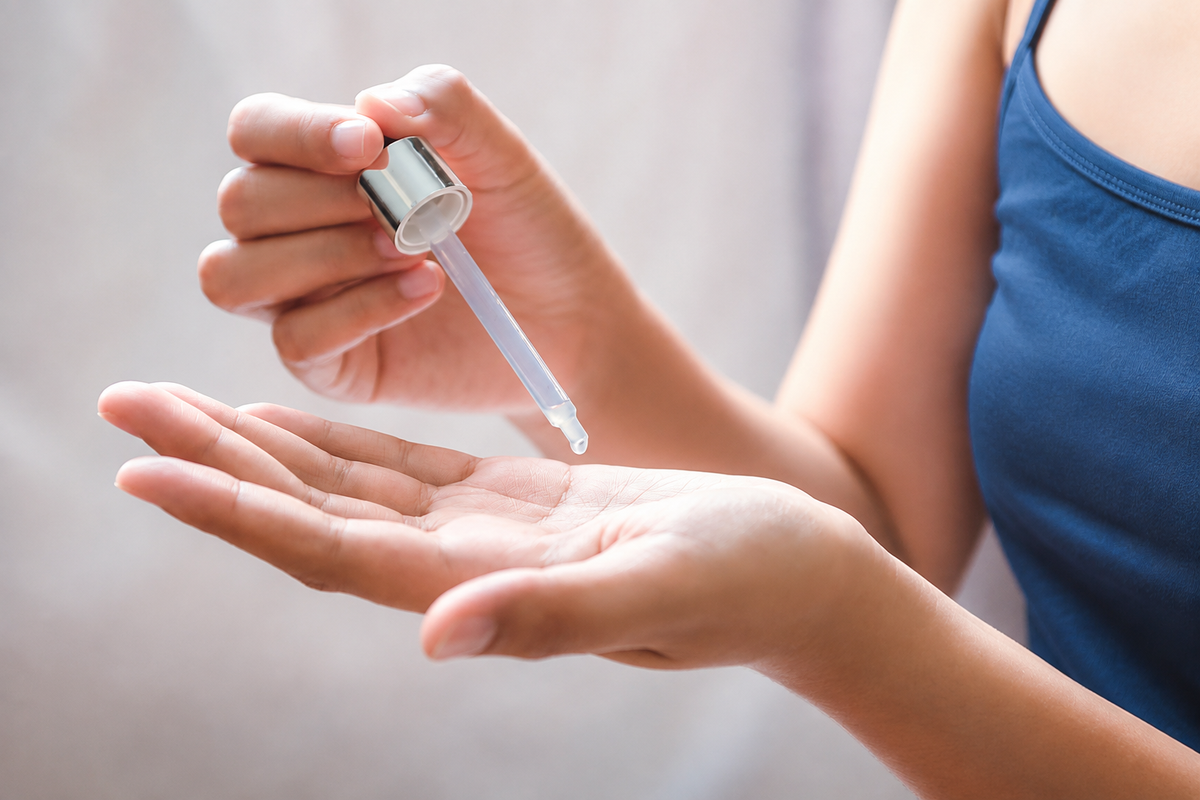


The short answer: Retinol supports anti-aging skin care by speeding up skin cell turnover, encouraging collagen production, and softening the look of fine lines, rough texture, and enlarged pores, usually over several months of consistent use. Pairing it with hyaluronic acid, as in Pilgrim's Retinol & Hyaluronic Acid Lift & Firm Serum, helps offset the dryness that often comes with starting retinol, while nightly application followed by daily sunscreen keeps the routine both effective and sustainable.
- Retinol binds to receptors inside skin cells that raise procollagen levels and speed up how quickly surface cells turn over, which is the mechanism behind firmer, smoother-looking skin over time.
- DermNet NZ notes that six months or more of consistent topical retinoid use is linked to visibly fewer fine wrinkles, less roughness, and softer solar-related texture changes.
- Retinol doesn't shrink pores physically, but clearing the buildup that stretches them can make pores look less noticeable as skin texture improves.
- Because retinol increases sun sensitivity, dermatologists recommend applying it only at night and following every morning with sunscreen.
- Beginners should start with the mildest formula every other night and build up gradually, since skipping that step is the most common cause of irritation.
Retinol comes up constantly in conversations about anti-aging skin care, and the benefits of retinol for anti-aging skin care are genuinely well documented. The harder part is using it correctly, not just using it. Here's what retinol actually does for skin, how Pilgrim formulates around it, and how to bring it into a routine without irritation.
What are the benefits of retinol for anti-aging skin care?
Retinol belongs to a class of vitamin A derivatives called retinoids, which work by binding to receptors inside skin cells and switching on genes involved in skin renewal (DermNet NZ). In prescription-strength forms like tretinoin, this same receptor activity has been shown to raise procollagen levels, the raw material for collagen types I and III, while speeding up the shedding of surface skin cells (StatPearls, NCBI Bookshelf). Cosmetic retinol, the over-the-counter form used in most serums, works through the same pathway at a gentler concentration, so results build more gradually than they would with a prescription retinoid. This matters because skin's own collagen production naturally declines and its fibers grow more disorganized with age, which is part of why skin loses firmness over time (DermNet NZ).
How does retinol improve fine lines and skin texture?
The timeline matters more here than the marketing usually suggests. DermNet notes that six months or more of consistent topical retinoid use is associated with fewer fine wrinkles, less visible roughness, and softer solar-related texture changes (DermNet NZ). In Pilgrim's own consumer panel, 91% of users reported fewer visible fine lines and 87% saw smoother-looking skin after using the Retinol & Hyaluronic Acid Lift & Firm Serum . That kind of figure is a useful data point, not a clinical guarantee, so it's worth reading alongside the slower, months-long timeline the research describes.
Does retinol help with the appearance of pores?
Retinol doesn't shrink pores physically, but it can make them look less obvious. Part of its mechanism involves helping loosen the buildup of dead skin cells and oil that stretches pores and makes them more visible, which is also why retinoids are used to help clear congested follicles in acne-prone skin (StatPearls, NCBI Bookshelf). When pores aren't as congested, overall texture reads smoother and pores appear tighter, even though their physical size hasn't actually changed. This is a slow, cumulative effect rather than something that shows up overnight.
Why pair retinol with hyaluronic acid?
Retinol's most common early drawback is dryness, and hyaluronic acid is one of the more established ingredients for addressing that. It's a humectant that draws moisture into the skin's surface layers, and dermatologists commonly recommend checking for it on ingredient labels specifically for its moisturizing effect (American Academy of Dermatology). Pilgrim's Retinol & Hyaluronic Acid Lift & Firm Serum combines 0.5% retinol with 1% hyaluronic acid for this reason, alongside pomegranate flower extract in the formula. Hydration in the same step won't eliminate purging or irritation for everyone, but it's a reasonable way to build a gentler entry point into retinol use.
How should beginners start using retinol safely?
Start slower than feels necessary. The American Academy of Dermatology recommends beginners use the least-intense retinoid formula available every other night at first, building up frequency gradually as skin adjusts (American Academy of Dermatology). Skipping that step raises the risk of irritation, and on deeper skin tones that irritation can trigger post-inflammatory hyperpigmentation, so pairing retinol with a moisturizer from the first application is worth doing rather than waiting for a problem to show up. Anyone with a diagnosed skin condition, active rosacea, or who is pregnant should check with a dermatologist before adding retinol to a routine at all.
Why is sunscreen essential to retinol for anti-aging skin care?
Retinol and other retinoids increase how sensitive skin is to UV light, which is a core reason they're formulated for night use in the first place (DermNet NZ). Applying sunscreen every morning after a retinol night isn't an optional extra. The AAD lists it alongside seeking shade and wearing protective clothing as part of using retinoids safely (American Academy of Dermatology). Pilgrim's 5% Niacinamide Hydra Glow Gel Sunscreen SPF 50+ PA++++ is a lightweight option for that morning step, layering hyaluronic acid into a broad-spectrum formula rather than relying on UV filters alone. Skipping sunscreen doesn't just raise the risk of sun damage. It can quietly undercut the fine-line and texture improvements retinol is meant to support.
If retinol is new to a routine, starting with a formula that already includes hydration, like the Lift & Firm Serum, and pairing it with a daily sunscreen habit is one of the more forgiving ways to begin. Pilgrim's full retinol range also has gentler formats, like night creams, for anyone who wants to ease in even further.
FAQ
What are the benefits of retinol for anti-aging skin care? The main benefits of retinol for anti-aging skin care are increased skin cell turnover, support for collagen production, and improved fine lines, texture, and pore appearance with consistent long-term use (DermNet NZ). These changes build gradually over months rather than days, and tend to be more noticeable when retinol is paired with hydration and daily sunscreen.
Who should use retinol, and who should avoid it? Retinol generally suits adults noticing early fine lines, uneven texture, or a loss of firmness, and it can be introduced across most skin types when started gradually. It is not recommended during pregnancy or breastfeeding, and anyone with rosacea, eczema, or another active skin condition should check with a dermatologist before starting (American Academy of Dermatology).
How often should beginners apply retinol? Beginners should apply the mildest retinol formula every other night at first, watching for redness, flaking, or tightness before increasing frequency (American Academy of Dermatology). Most people can build up to nightly use over several weeks once their skin has adjusted.
How long does it take to see results from retinol? Meaningful improvements in fine lines and texture are typically linked to at least six months of consistent use in the available research, not days or a couple of weeks (DermNet NZ). Some people notice smoother-feeling skin sooner, but visible changes to wrinkles and firmness need sustained, regular application to show up.
Can retinol be combined with hyaluronic acid? Yes. Hyaluronic acid is a hydrating ingredient commonly recommended alongside actives like retinol specifically to help offset dryness (American Academy of Dermatology). Pilgrim's Retinol & Hyaluronic Acid Lift & Firm Serum combines both ingredients in one step for that reason.
What should retinol not be combined with? Layering retinol with other strong exfoliating actives, such as high-percentage AHAs or BHAs, on the same night raises the risk of irritation and is generally best avoided, especially by beginners. Using one active in the morning and retinol at night, or alternating nights between actives, is a more common way to combine them without overwhelming the skin barrier.
Does retinol need to be used with sunscreen? Yes. Retinol increases skin's sensitivity to UV light, so dermatologists recommend applying sunscreen every morning after a night of retinol use, along with seeking shade and wearing protective clothing (American Academy of Dermatology). Skipping sunscreen can also quietly undercut the fine-line and texture benefits retinol is meant to support.
When should someone see a dermatologist about retinol use? Persistent redness, burning, or peeling that doesn't improve after easing off frequency, or any flare-up of an existing skin condition, are reasons to pause retinol and check with a dermatologist. Anyone who is pregnant, breastfeeding, or managing rosacea or eczema should get personalized guidance before starting retinol rather than troubleshooting a reaction alone.
References
- DermNet NZ. "Topical retinoids (vitamin A creams)." https://dermnetnz.org/topics/topical-retinoids
- DermNet NZ. "Collagen." https://dermnetnz.org/topics/collagen
- StatPearls, NCBI Bookshelf. "Tretinoin." https://www.ncbi.nlm.nih.gov/books/NBK557478/
- American Academy of Dermatology. "Retinoid or retinol?" https://www.aad.org/public/everyday-care/skin-care-secrets/anti-aging/retinoid-retinol
- American Academy of Dermatology. "How to pick the right moisturizer for your skin." https://www.aad.org/public/everyday-care/skin-care-basics/dry/pick-moisturizer