

By Dr. Shweta Lamba Narula,
The short answer: Oily skin needs Vitamin C. Excess sebum oxidises on the skin surface and generates the free radicals behind inflammation, comedone formation, and post-acne dark marks. The right form matters more than the percentage: stable derivatives like 3-O-ethyl ascorbic acid absorb quickly without the greasy residue of some L-ascorbic acid formulas, and have been shown to reduce tyrosinase activity and melanin content in melanocytes. Use it in the morning, under a non-comedogenic SPF 50+, and pair with niacinamide for simultaneous oil control and brightening.
If you have oily skin, you have probably been told to keep your routine light. That advice makes sense for moisturisers and heavy oils. It does not apply to Vitamin C. Oily skin is arguably more in need of antioxidant protection than dry skin. Excess sebum oxidises on the skin surface and creates free radicals that drive inflammation and accelerate the very pigmentation you are trying to fade. The question is not whether to use a best vitamin c serum for oily skin. The question is which formulation works without adding to the grease.
Why does oily skin still need Vitamin C?
Vitamin C is an antioxidant. Its primary job on the skin is to neutralise free radicals, unstable molecules generated by UV exposure, pollution, and sebum oxidation. When sebum sits on the skin surface and oxidises, it triggers an inflammatory response inside pores. Lipid peroxidation of sebum components, particularly squalene, generates reactive oxygen species that drive comedone formation and inflammatory acne lesions. Vitamin C intervenes at this stage by neutralising the oxidative stress before it can escalate.
Beyond antioxidant protection, Vitamin C inhibits tyrosinase, the enzyme responsible for initiating melanin production, which is why it fades dark spots and post-acne marks. Post-inflammatory hyperpigmentation (PIH) is disproportionately common in oily and acne-prone skin, where breakouts leave behind brown marks that can persist for months. For Indian skin, which falls in the medium-to-deep tone range and produces more melanin in response to inflammation, consistent Vitamin C use is one of the most evidence-supported approaches to managing PIH.
Does Vitamin C make oily skin more oily?
No. Vitamin C is not an emollient or an oil. Applied as a serum, it does not add oil to the skin. What can feel heavy or greasy on oily skin is the base the serum is formulated in. Some L-ascorbic acid serums use a silicone or oil-heavy carrier, which sits uncomfortably on already oily skin. The solution is choosing a water-based or gel formulation, not avoiding the ingredient.
Which form of Vitamin C works best for oily skin?
L-ascorbic acid (LAA) is the most studied form. It is potent, but it requires a low acidic pH to penetrate the skin, which can cause stinging, and it oxidises quickly when exposed to air, light, and humidity. In India's humid climate, an unstable LAA serum on an open bathroom shelf loses potency faster than it would in a temperate environment.
Stable derivatives, particularly 3-O-ethyl ascorbic acid, are better suited to oily skin. Studies show that 3-O-ethyl ascorbic acid reduces tyrosinase activity and melanin content in melanocytes without requiring the low pH that makes LAA sting. These derivatives are formulated in lightweight, water-based serums that absorb quickly and leave no residue on oily skin. They are also more resistant to oxidation in humid conditions, a practical advantage for year-round Indian use.
How to choose the right Vitamin C serum for oily skin
- Formulation base: Water-based or gel-based. Avoid silicone-heavy or oil-infused formulas.
- Vitamin C form: 3-O-ethyl ascorbic acid, sodium ascorbyl phosphate, or ascorbyl glucoside. Stable, lightweight, effective.
- Partner ingredients: Niacinamide is the ideal companion. It regulates sebum production by signalling the sebaceous glands to produce less oil, and reduces the transfer of melanin to skin cells. A serum combining both simplifies the routine.
- Concentration: 10% is the right starting point. Higher concentrations (15-20%) add irritation risk on acne-prone skin.
- Packaging: Dark glass or opaque packaging prevents oxidation. Clear dropper bottles accelerate degradation regardless of the form used.
The best Vitamin C serums for oily skin in India: 4 picks
- Pilgrim 10% Vitamin C Face Serum. Best for oily and combination skin. Uses 3-O-ethyl ascorbic acid at 10%, combined with 5% niacinamide for simultaneous oil control and brightening, plus Korean CICA to calm irritation. The water-based formula absorbs quickly with no greasy finish. This is the combination that makes it well suited to oily Indian skin. Two separate pathways addressed by one serum.
- The Ordinary Ascorbic Acid 8% + Alpha Arbutin 2% (Canada). Best for oily skin that tolerates pure L-ascorbic acid. 8% LAA keeps concentration low enough to reduce irritation risk, paired with alpha arbutin for pigmentation. Thin, water-based formula. Requires careful dark, cool storage due to LAA's instability.
- L'Oréal Paris Revitalift 10% Pure Vitamin C Serum (France). Best budget option. 10% pure Vitamin C in a lightweight serum at a mass-market price. A reasonable first step for those testing the ingredient on oily skin.
- Paula's Choice C15 Super Booster (USA). Best for experienced users targeting stubborn pigmentation. 15% L-ascorbic acid with vitamin E and ferulic acid. Potent and well formulated, but a longer adjustment period is realistic for oily or reactive skin.
Pilgrim's consumer panel data for the 10% serum, brand-reported and not an independent clinical trial, indicates visible brightening for many users within the first few days of use. Meaningful pigmentation improvement requires 8 to 12 weeks of consistent daily use alongside SPF.
How to use Vitamin C serum if you have oily skin
Morning routine:
- Gentle, non-stripping cleanser
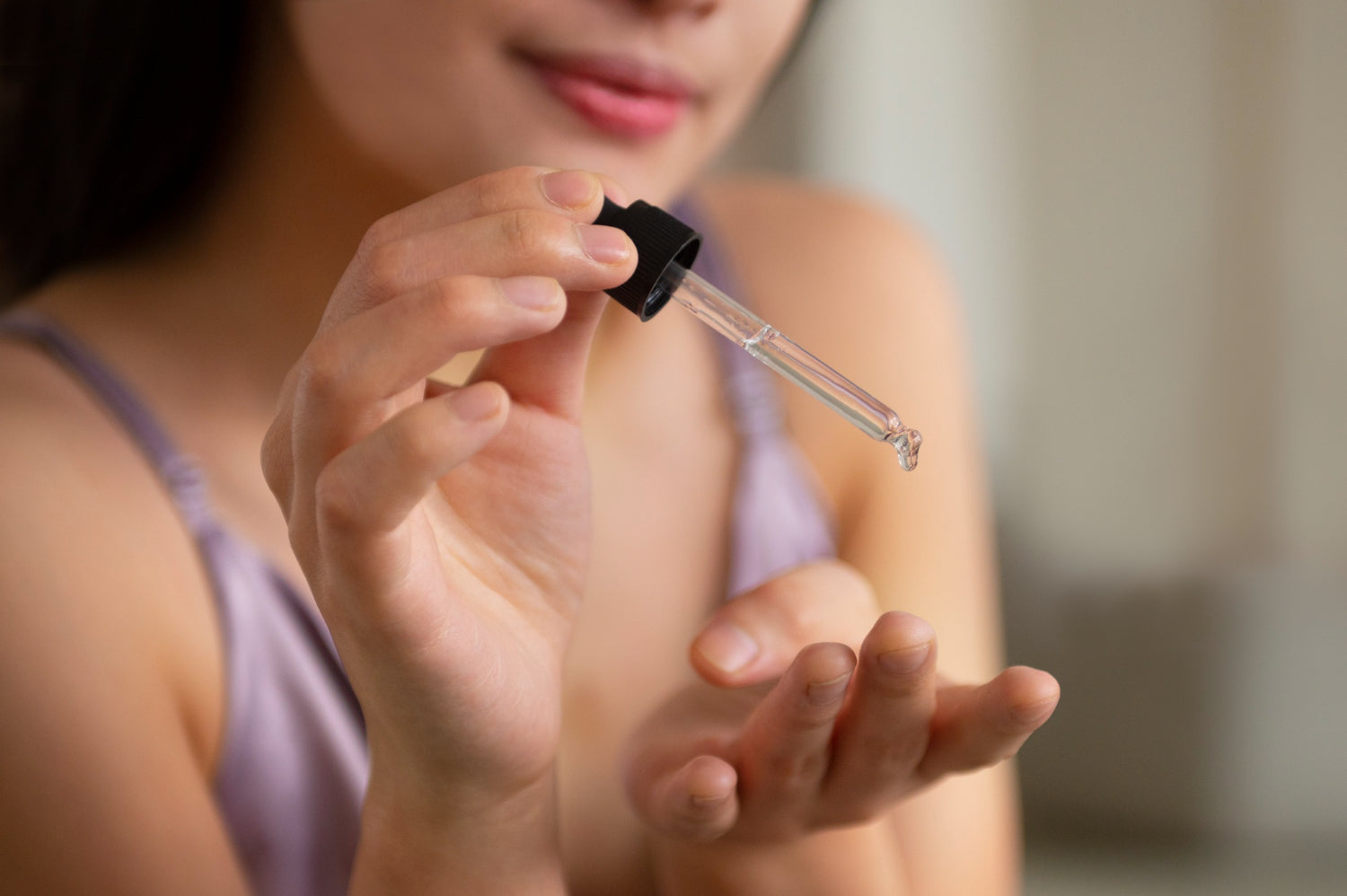
- Pilgrim 10% Vitamin C Face Serum. 3 to 4 drops patted onto dry skin; wait 60 seconds to absorb
- Lightweight gel moisturiser
- SPF 50+ PA++++, non-comedogenic
Evening routine:
- Cleanser
- Niacinamide serum. Targets melanin transfer and oil regulation
- Lightweight moisturiser
Vitamin C in the AM paired with SPF gives maximum antioxidant protection against UV and sebum oxidation. Keep retinol or AHAs in the evening to avoid layering too many actives at once.
Common mistakes when using Vitamin C on oily skin
Choosing the wrong formulation. A heavy or silicone-based Vitamin C serum will feel uncomfortable on oily skin. This is a formulation issue, not a skin type incompatibility. A water-based formula resolves it.
Applying to damp skin. On oily skin, damp application dilutes concentration and causes uneven absorption. Apply to completely dry, cleansed skin.
Skipping niacinamide. For oily, acne-prone skin, niacinamide and Vitamin C are complementary. One controls oil and calms inflammation, the other fades the marks breakouts leave. Using Vitamin C alone addresses only half the concern.
Skipping SPF. Without SPF, UV exposure deepens PIH faster than Vitamin C can fade it. This is the most common reason oily skin users feel their serum is not working.
Using too much. Three to four drops covers the entire face. More product increases pilling risk and adds an unnecessary layer on oil-prone skin.
Quitting at three weeks. Vitamin C interrupts melanin production rather than bleaching existing pigment. That process takes 8 to 12 weeks to show visible change.
Frequently asked questions
Is Vitamin C serum good for oily skin?
Yes. Vitamin C is one of the most suitable actives for oily skin. It neutralises the oxidative stress caused by sebum on the skin surface, one of the triggers for inflammation and breakouts, and fades the post-acne dark marks that oily, breakout-prone skin commonly develops. The key is choosing a lightweight, water-based formulation rather than a heavy one.
Does Vitamin C make oily skin produce more oil?
No. Vitamin C is not an oil or an emollient. It does not add oil to the skin. If a serum feels greasy, the issue is the carrier base, not the Vitamin C itself. Water-based serums using stable derivatives like 3-O-ethyl ascorbic acid absorb quickly and leave no oily residue.
Which Vitamin C serum is best for oily skin in India?
For oily skin in India's humid climate, a stable derivative like 3-O-ethyl ascorbic acid in a water-based serum outperforms pure L-ascorbic acid. The derivative stays stable in humidity, absorbs without grease, and is gentler on acne-prone skin. A serum that already combines Vitamin C with niacinamide covers both brightening and oil control in one step.
Can I use Vitamin C with niacinamide if I have oily skin?
Yes. It is actually the recommended combination for oily skin. Niacinamide regulates sebum and reduces post-acne inflammation; Vitamin C fades the dark marks those breakouts leave behind. They can be used in the same morning routine without conflict. Pilgrim's 10% Vitamin C serum already combines both at clinically studied concentrations.
How long does Vitamin C take to fade dark spots on oily skin?
Most users notice an initial improvement in radiance within the first week. Visible fading of post-acne dark marks typically takes 8 to 12 weeks of consistent daily use. Daily SPF is non-negotiable. Without it, UV exposure counteracts the brightening effect and deepens the spots you are trying to fade.
Should I use Vitamin C in the morning or at night if I have oily skin?
Morning is the better choice. Used in the AM, Vitamin C neutralises free radicals from UV exposure and sebum oxidation throughout the day. Pair it with SPF 50+ for maximum protection. Reserve the evening for niacinamide, retinol, or AHAs.
What concentration of Vitamin C is right for oily skin?
10% is the reliable starting point. It delivers visible brightening without the irritation risk of 15 to 20% formulas, which matters for oily skin that can also be sensitive or breakout-prone. Move to 15% only after building tolerance, and only if targeting stubborn pigmentation that has not responded to 10%.
References
- Telang PS. Vitamin C in dermatology. Indian Dermatology Online Journal / PMC. https://pmc.ncbi.nlm.nih.gov/articles/PMC3673383/
- Pullar JM, et al. The Roles of Vitamin C in Skin Health. Nutrients / PMC. https://pmc.ncbi.nlm.nih.gov/articles/PMC5605218/
- Ando H, et al. Intramelanocytic Acidification Plays a Role in the Antimelanogenic and Antioxidative Properties of Vitamin C and Its Derivatives (3-O-ethyl ascorbic acid). PubMed, 2019. https://pubmed.ncbi.nlm.nih.gov/31214276/
- Thiboutot D, et al. Addressing Free Radical Oxidation in Acne Vulgaris. PMC/NCBI. https://www.ncbi.nlm.nih.gov/pmc/articles/PMC4756869/
- Kurokawa I, et al. Accumulation of lipid peroxide in the content of comedones. PubMed, 2009. https://pubmed.ncbi.nlm.nih.gov/19527342/
- Postinflammatory Hyperpigmentation. StatPearls, NCBI Bookshelf. https://www.ncbi.nlm.nih.gov/books/NBK559150/
- Photoprotection for Skin of Color. PMC/NCBI. https://pmc.ncbi.nlm.nih.gov/articles/PMC8766623/
- Hakozaki T, et al. The effect of niacinamide on reducing cutaneous pigmentation and suppression of melanosome transfer. Br J Dermatol, 2002. https://pubmed.ncbi.nlm.nih.gov/12100180/
- Mechanistic Insights into the Multiple Functions of Niacinamide. Antioxidants (Basel) / PMC, 2024. https://pmc.ncbi.nlm.nih.gov/articles/PMC11047333/