

The short answer: Sticky, oily dandruff happens when Malassezia yeast on your scalp breaks down excess sebum into irritating byproducts, and monsoon humidity raises scalp sweat and oil output that feeds this cycle (StatPearls, 2024). Dry, flaky dandruff is milder skin shedding without heavy oil buildup. Anti-dandruff shampoos with zinc pyrithione, piroctone olamine, or salicylic acid, used consistently over several weeks, may help address the sebum-yeast imbalance behind sticky, oily dandruff.
Key takeaways
- Sticky, oily dandruff and dry, flaky dandruff are two different presentations of the same underlying scalp condition, not two separate problems (StatPearls, 2024).
- Malassezia yeast feeds on scalp sebum and its breakdown byproducts are what trigger itching, inflammation, and clumped, greasy flakes (DermNet, 2023).
- Warm, humid climates are linked to a higher incidence of yeast-driven scalp and skin conditions, which is one reason monsoon months can feel worse (Medscape, 2025).
- Zinc pyrithione, salicylic acid, piroctone olamine, and ketoconazole are the actives most consistently recommended for dandruff, each working slightly differently (AAD, 2024).
- Washing more often without the right actives can dry out hair without actually addressing sticky, oily dandruff at its source.
Dandruff has a reputation for being dry, white, and flaky, the kind of thing you brush off a dark t-shirt. But plenty of people notice something different in monsoon: flakes that feel damp, yellowish, and stuck to the scalp rather than loose and powdery. If that sounds familiar, you’re not dealing with a rarer condition, just a different presentation of the same one. Sticky, oily dandruff and dry dandruff sit on the same spectrum, and monsoon weather tends to push things toward the oilier end.
What actually causes sticky, oily dandruff?
Dandruff is largely driven by a yeast called Malassezia, which lives on everyone’s scalp and feeds on the fatty acids in sebum, the oil your scalp naturally produces (StatPearls, 2024). When Malassezia breaks down sebum, it leaves behind irritants that can inflame the scalp and speed up skin cell turnover. That faster turnover is what shows up as flakes.
How those flakes look depends on how much oil is mixed in. If your scalp runs oily and produces sebum quickly, the shed skin cells clump together with that oil into flakes that look yellowish, feel greasy, and stick to hair strands. If your scalp is drier, the same underlying process produces smaller, drier, whiter flakes that fall away more easily (DermNet, 2023). Same mechanism, different output, largely dictated by how much sebum is available for the yeast to act on.
Is oily dandruff different from dry dandruff, or just a worse version?
Dermatologists generally describe dandruff and its more inflamed cousin, seborrheic dermatitis, as points on one spectrum rather than separate diseases. On the milder end, you get fine, dry flaking with little to no redness. Further along, you get thicker, greasier, yellow-tinged scale, often with visible redness and more persistent itch (StatPearls, 2024).
Sticky, oily dandruff usually sits closer to that second end. It’s not automatically more “serious,” but it does tend to respond better to a slightly different approach than dry flaking does, which is why treating both the same way often disappoints people.
Why does monsoon seem to make it worse?
A few things happen at once during monsoon. Humidity keeps skin (including scalp skin) more hydrated and warm, which can support sebum production and creates conditions where sweat and oil sit on the scalp for longer between washes. Warm, humid climates are also associated with a higher incidence of Malassezia-driven skin conditions in general (Medscape, 2025), which lines up with why oily dandruff often feels worse in July and August than in December.
It’s worth being honest that the picture isn’t perfectly one-directional: at least one climate study found classic seborrheic dermatitis flares were actually more frequent in colder, drier months, tied to skin barrier stress rather than humidity (Sisli Etfal Hospital Medical Bulletin, 2022). What this suggests is that “monsoon dandruff” is likely driven less by humidity alone and more by the combination of heat, sweat, less frequent washing due to rain-day hair avoidance, and product buildup, all of which push a scalp toward the oilier, stickier end of the dandruff spectrum even if humidity isn’t the single cause.
How should sticky, oily dandruff be treated differently?
For oily, sticky flakes, the priority is usually a shampoo that combines an antifungal or yeast-regulating active with something that helps break down existing buildup, rather than a heavy, moisturizing anti-dandruff formula meant for dry scalps. Zinc pyrithione and piroctone olamine work by curbing Malassezia activity, while salicylic acid works as a keratolytic, loosening the flake layer so it rinses out instead of clumping along the hair shaft (AAD, 2024).
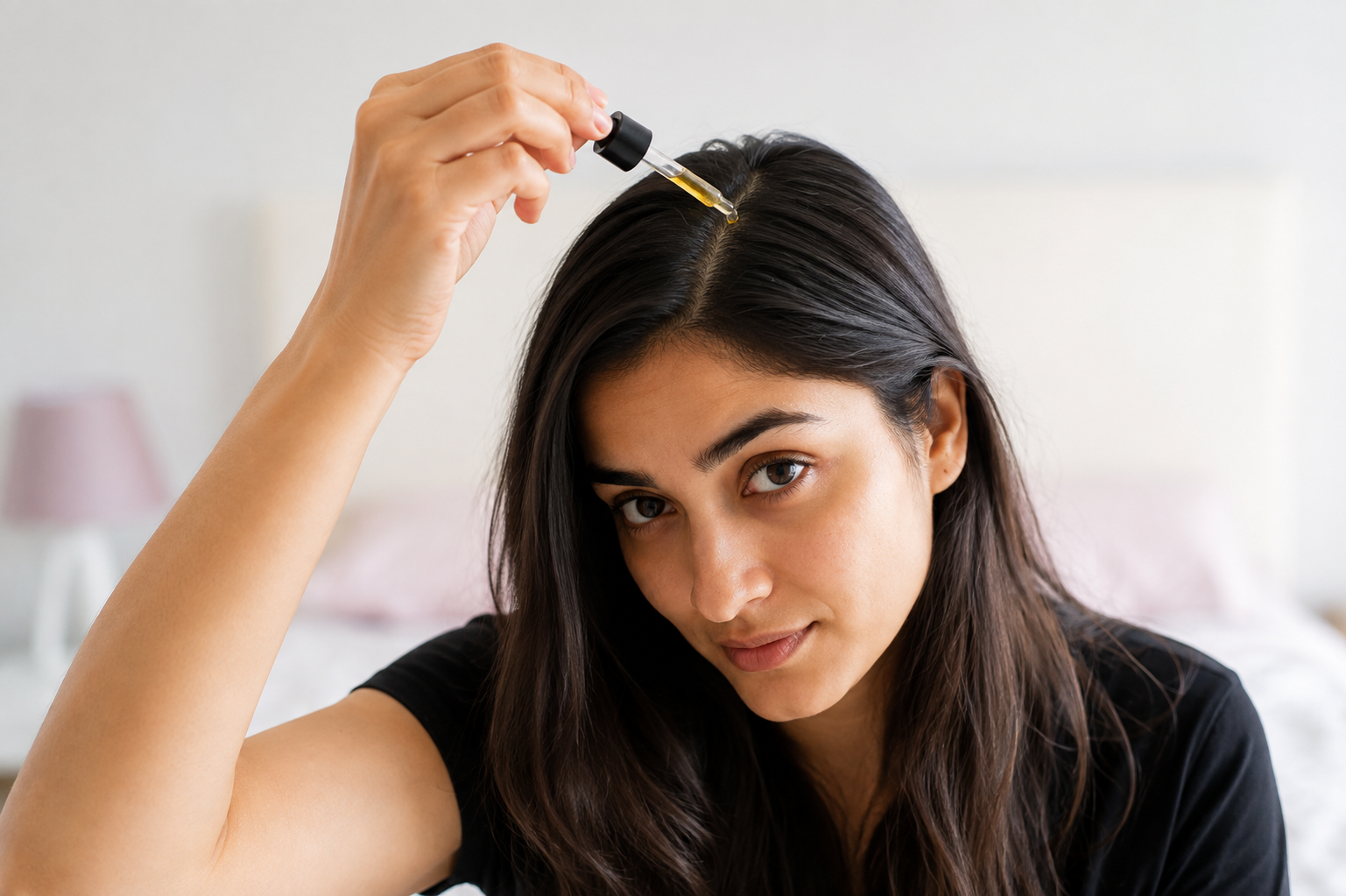
Pilgrim’s Australian Tea Tree Non-Drying Anti-Dandruff Shampoo Cool Menthol combines salicylic acid, zinc pyrithione, and piroctone olamine with tea tree oil and menthol, which is worth considering specifically in monsoon since the cooling effect can also help with the sweatier, itchier scalp that comes with heat and humidity. For scalps where buildup feels stubborn between washes, a leave-on option like the Australian Tea Tree Anti-Dandruff Scalp Serum, applied a few times a week before shampooing, is meant to work alongside a wash-off product rather than replace it.
Washing more frequently on its own, without an active ingredient doing the actual work, tends to just strip hair without solving the underlying sebum-yeast issue. Consistency matters more than frequency: most anti-dandruff actives need several weeks of regular use before flaking visibly reduces, and stopping as soon as flakes calm down is a common reason dandruff seems to “come back.”
When does dandruff need a dermatologist instead of a shampoo?
Over-the-counter anti-dandruff shampoos are a reasonable first step for uncomplicated flaking, oily or dry. But persistent redness, thick crusted scale, dandruff that spreads beyond the scalp to eyebrows or the sides of the nose, or flaking that doesn’t improve after 6–8 weeks of consistent use with an appropriate shampoo are all reasons to see a dermatologist rather than switching products repeatedly. A dermatologist can also rule out other scalp conditions that can mimic dandruff, and can prescribe higher-strength options when over-the-counter actives aren’t enough.
If you’re also dealing with noticeable hair fall alongside dandruff and scalp itch, it’s worth reading a longer breakdown of monsoon hair fall and scalp care, since the two often overlap and the underlying scalp environment matters for both.
Frequently asked questions
What causes sticky, oily dandruff instead of dry flakes? Sticky, oily dandruff happens when Malassezia yeast breaks down excess scalp sebum, and the resulting flakes mix with that oil instead of shedding as dry, powdery skin. It reflects how much sebum is available on a given scalp, not a separate condition from dry dandruff.
Is oily dandruff worse than dry dandruff? Oily dandruff isn’t automatically more serious, but it sits closer to the more inflamed end of the dandruff spectrum and often comes with more visible redness and itch. It generally responds better to shampoos that combine an antifungal active with a keratolytic like salicylic acid.
Why does dandruff get worse specifically during monsoon? Monsoon combines heat, humidity, and sweat, all of which can keep the scalp oilier for longer between washes and create conditions linked to more yeast-driven scalp issues. Reduced washing on rainy days and product buildup often add to the effect.
Will washing my hair every day fix oily dandruff? Washing more often can help remove surface oil temporarily, but it doesn’t address the yeast-sebum imbalance driving oily dandruff and can leave hair overly dry from stripping. An anti-dandruff shampoo with an active ingredient, used 2–3 times a week, tends to work better than daily washing alone.
Which ingredients actually help with sticky, oily dandruff? Zinc pyrithione, piroctone olamine, and ketoconazole target the Malassezia yeast involved in dandruff, while salicylic acid helps loosen and lift existing flakes so they rinse out. Many anti-dandruff shampoos, including Pilgrim’s tea tree anti-dandruff shampoo and scalp serum, combine two or more of these actives.
Can oily dandruff and hair fall happen at the same time? Yes, oily, itchy scalps are commonly reported alongside increased hair fall, since ongoing inflammation and scratching can disrupt the hair growth cycle. Addressing the underlying scalp condition is usually the first step before hair fall itself improves. Read more about monsoon hair fall and scalp care.
How long does it take to see results from an anti-dandruff shampoo? Most people need consistent use, 2–3 times a week, for 4–6 weeks before flaking visibly reduces, since anti-dandruff actives work gradually on yeast levels and skin turnover. Stopping too early once flakes calm down is a common reason dandruff appears to return.
When should sticky, oily dandruff be checked by a dermatologist? See a dermatologist if flaking is thick and crusted, spreads to eyebrows or the sides of the nose, comes with significant redness, or doesn’t improve after 6–8 weeks of a suitable anti-dandruff shampoo. These can indicate seborrheic dermatitis or another scalp condition that needs a stronger, prescribed approach.
References
Seborrheic Dermatitis, StatPearls, NCBI Bookshelf, updated March 2024. https://www.ncbi.nlm.nih.gov/books/NBK551707/
Seborrhoeic dermatitis, DermNet NZ, 2023. https://dermnetnz.org/topics/seborrhoeic-dermatitis
Malassezia (Pityrosporum) Folliculitis, Medscape, updated 2025. https://emedicine.medscape.com/article/1091037-overview
How to treat dandruff, American Academy of Dermatology, 2024. https://www.aad.org/public/everyday-care/hair-scalp-care/scalp/treat-dandruff
Is the Frequency of Seborrheic Dermatitis Related to Climate Parameters? Medical Bulletin of Sisli Etfal Hospital, 56(1):91–95, 2022. https://pdf.journalagent.com/sislietfaltip/pdfs/SETB_56_1_91_95%5BA%5D.pdf