

The short answer: Alpha arbutin is a gentle, plant-derived compound that blocks the tyrosinase enzyme responsible for excess melanin, fading dark spots and post-acne marks without the irritation risk long tied to hydroquinone. Its tyrosinase-inhibiting activity is enhanced when combined with vitamin C, which is why Pilgrim's Brightening Serum pairs 2% alpha arbutin with 3% vitamin C. Most people notice a visible change in pigmentation within 8 to 12 weeks of consistent, twice-daily use alongside SPF.
Key takeaways
- Alpha arbutin fades dark spots by blocking tyrosinase, the enzyme that triggers melanin production, rather than bleaching skin indiscriminately (Boo, 2021).
- A split-face trial found an arbutin-containing formula caused significantly less irritation than hydroquinone 4% over four weeks of use (Kalasho et al., 2020).
- Arbutin's tyrosinase-inhibiting effect is enhanced when paired with vitamin C, particularly under low-oxygen conditions in the skin (Boo, 2021).
- In a melasma trial, an alpha arbutin and kojic acid combination matched a stronger triple-combination cream on pigment clearing while causing less lingering redness and lower recurrence (Tantanasrigul et al., 2025).
- Realistic timelines matter: comparable tyrosinase-inhibiting agents typically need 5 to 8 weeks to show initial change, with fuller results building over several months (Cassiano et al., 2022).
Dark spots and uneven tone are among the most common reasons people start reading skincare ingredient lists, and alpha arbutin shows up on a lot of those lists for good reason. Unlike ingredients riding on marketing buzz alone, it has real mechanistic research behind how it works on pigmentation. Below is what alpha arbutin actually does, how it compares to older options like hydroquinone, and where it realistically fits into a routine.
How does alpha arbutin fade pigmentation and dark spots?
Pigmentation - whether it's a post-acne mark, a sun-triggered patch, or melasma - comes down to an enzyme called tyrosinase, which drives the skin's production of melanin. Alpha arbutin is structurally similar to tyrosine, the amino acid tyrosinase normally acts on, so it can occupy the enzyme's active site and block it from doing its job (Boo, 2021). Under certain conditions it goes further, binding tyrosinase in a way that inactivates it rather than just slowing it down temporarily.
This mechanism was first described in human melanocyte cultures nearly three decades ago, when researchers showed arbutin suppressed melanin formation without killing or damaging the pigment cells themselves (Maeda & Fukuda, 1996). That distinction matters: alpha arbutin is working upstream, on the enzyme that starts the pigmentation process, rather than bleaching or stripping pigment that's already formed.
Is alpha arbutin gentler than hydroquinone?
Hydroquinone has been the reference standard for pigmentation for decades, and it works - but it comes with real caveats. DermNet notes that hydroquinone above 4% can cause irritant contact dermatitis, that it's prescription-only in many countries, and that prolonged high-concentration use carries a risk of exogenous ochronosis, a paradoxical darkening of the skin (DermNet, Hydroquinone). Its safety in pregnancy and breastfeeding also hasn't been established.
Alpha arbutin was developed partly to sidestep those issues. In an 18-person split-face study, one side received a formula containing arbutin (alongside vitamin C, niacinamide, and other actives) while the other received hydroquinone 4% nightly for a month. The arbutin-based side showed comparable pigment improvement with markedly better tolerability - no patients reported intolerance to it, while one discontinued hydroquinone due to severe irritation (Kalasho et al., 2020). That's a small trial, not a guarantee of zero irritation for everyone, but it's a genuine, controlled comparison rather than a marketing claim.
Why does alpha arbutin work better with vitamin C?
Alpha arbutin and vitamin C aren't just commonly bundled together as a formulation choice - there's a mechanistic reason. A 2021 review notes that arbutin's tyrosinase-inhibiting activity is measurably enhanced when combined with L-ascorbic acid (vitamin C), especially in low-oxygen conditions similar to what skin experiences under a layer of product (Boo, 2021). Vitamin C also works on pigmentation through a separate pathway of its own, interfering with tyrosinase and adding antioxidant support against the UV exposure that triggers new pigment in the first place.
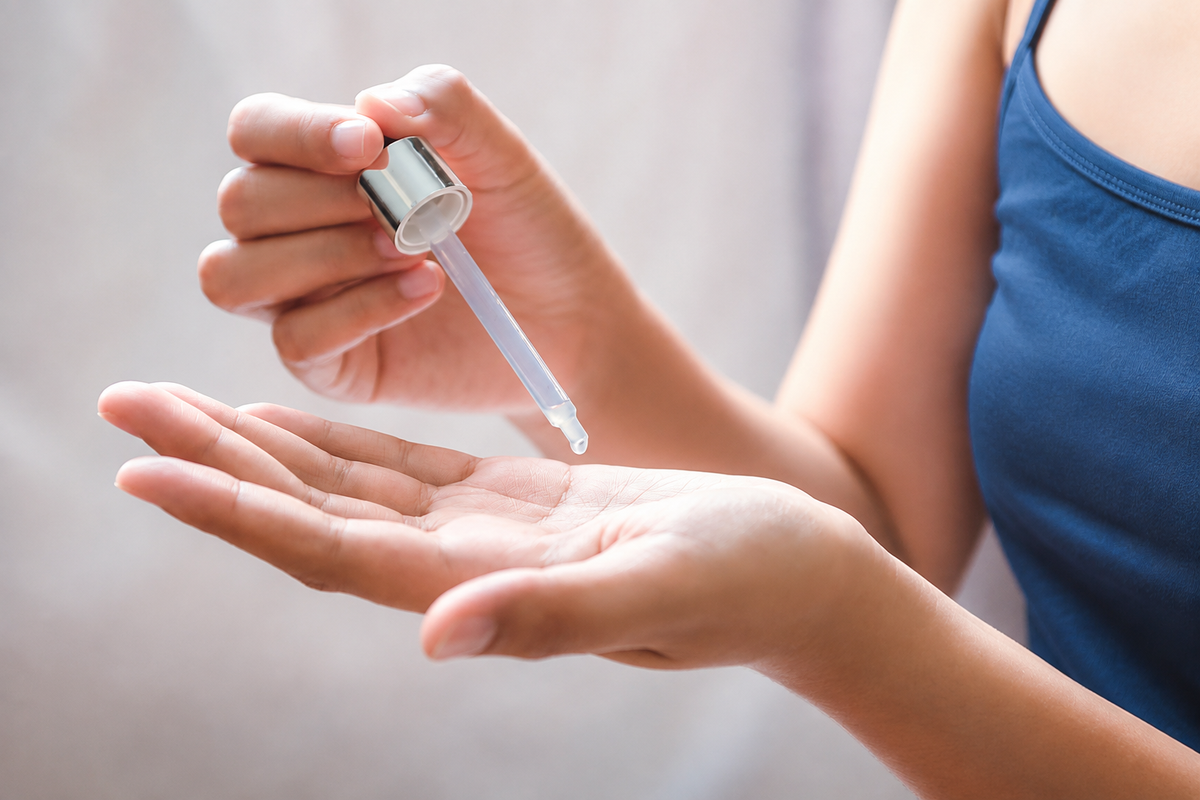
Pilgrim's 2% Alpha Arbutin Brightening Serum is built around this pairing, combining 2% alpha arbutin with 3% vitamin C in one 30ml formula alongside blueberry extract and hyaluronic acid. It's meant to be applied as 3 to 5 drops on clean, dry skin, once or twice daily.
Is alpha arbutin safe for melasma-prone or sensitive skin?
Not all skin darkening is the same condition, and that distinction matters before reaching for any brightening active. Melasma is a distinct, usually hormonally-driven condition that shows up as symmetrical brown-to-grey patches, most common in women aged 20 to 40 with naturally brown skin tones (DermNet, Melasma). Post-inflammatory hyperpigmentation (PIH), by contrast, is a mark left behind after acne, irritation, or injury, and it disproportionately affects and lingers longer in darker skin tones - StatPearls cites incidence as high as 65% in people with acne and Fitzpatrick skin types IV to VI (Lawrence et al., StatPearls).
Because alpha arbutin works gradually and has a lower irritation profile than hydroquinone or stronger acids, it's generally considered a reasonable option for both conditions, including on reactive or sensitive skin. In a 12-week melasma trial, an alpha arbutin 5% and kojic acid 2% combination performed comparably to a stronger triple-combination cream, and the arbutin-based side showed erythema resolving by week 12 while the stronger cream's irritation persisted, with fewer relapses at follow-up (Tantanasrigul et al., 2025). That said, if pigmentation appears suddenly, spreads beyond sun-exposed skin, or shows up alongside other symptoms, it's worth seeing a dermatologist rather than self-treating, since a handful of underlying conditions (hormonal or otherwise) can also cause skin darkening.
How long does alpha arbutin take to show visible results?
This is where honesty about timelines matters more than the marketing on most brightening products. A 2022 review of melasma treatments found that hydroquinone, a comparably-acting tyrosinase inhibitor, produces its first visible depigmenting effect after 5 to 8 weeks, with roughly 30 to 40% improvement in pigmentation scores by week 8 and 45 to 55% by week 16 (Cassiano et al., 2022). Kojic acid, a milder agent often combined with arbutin, showed initial change from around 2 to 4 weeks, with improvement continuing for up to six months. Alpha arbutin, working through a related but gentler mechanism, sits in a similar range: expect early signs by around 8 weeks and a fuller picture closer to 12 weeks or beyond, not overnight change.
Daily sunscreen isn't optional alongside any of this - new UV exposure re-triggers the same tyrosinase pathway alpha arbutin is trying to slow down, which can undo weeks of progress. Pairing a brightening serum with something like Pilgrim's 5% Niacinamide Hydra Glow Gel Sunscreen SPF 50+ PA++++ each morning is part of making the timeline above realistic rather than optimistic.
How do you add alpha arbutin serum to your routine?
Apply the serum to clean, dry skin, before moisturiser, once or twice daily - most people start once daily and build up as tolerated. It layers reasonably well with most other actives, though introducing one new product at a time makes it easier to tell what's working. Consistency across the full 8-to-12-week window matters more than the exact time of day you apply it, and skipping days will stretch out how long you wait to see change.
Alpha arbutin earns its place in a brightening routine because it targets the source of pigmentation rather than papering over it, and it does this with a meaningfully better tolerability profile than older standards like hydroquinone. It won't replace a dermatologist visit for melasma that isn't responding to consistent use, or for pigmentation that appears suddenly or spreads unusually. But for the common case - dark spots and uneven tone that build up gradually - it's a well-studied, patient option worth giving a full three months before judging it.
Frequently asked questions
What does alpha arbutin actually do for skin? Alpha arbutin blocks the tyrosinase enzyme that triggers melanin production, which helps fade dark spots, post-acne marks, and uneven tone at the source rather than bleaching pigment that's already there (Boo, 2021).
Who should use alpha arbutin? Alpha arbutin suits most skin types dealing with dark spots, post-acne marks, or early melasma, including sensitive or reactive skin that doesn't tolerate hydroquinone or stronger acids well (Kalasho et al., 2020).
How much alpha arbutin should I use, and how often? Formulations studied for melasma have used concentrations from 1% up to 5%, often combined with other actives; Pilgrim's serum is formulated at 2% alongside 3% vitamin C, applied as 3 to 5 drops once or twice daily to clean, dry skin.
How long does alpha arbutin take to show results? Expect early signs of change around 8 weeks of consistent daily use, with fuller results building closer to 12 weeks or beyond, similar to timelines seen with comparable tyrosinase inhibitors in clinical study (Cassiano et al., 2022).
Can alpha arbutin cause irritation? Alpha arbutin is generally well tolerated and was shown to cause significantly less irritation than hydroquinone 4% in a controlled split-face comparison, though patch-testing any new active is a reasonable precaution (Kalasho et al., 2020).
What shouldn't I combine alpha arbutin with? Alpha arbutin generally layers well with other actives, including vitamin C, which can enhance its effect. Introducing one new active at a time, rather than a full new routine at once, makes it easier to spot irritation if it happens.
Is alpha arbutin a substitute for sunscreen? No. Alpha arbutin slows new pigment formation, but daily broad-spectrum sunscreen is what prevents new UV-triggered pigmentation from forming in the first place - skipping it undercuts the serum's own timeline.
When should I see a dermatologist instead of relying on alpha arbutin? See a dermatologist if pigmentation appears suddenly, spreads beyond sun-exposed skin, doesn't improve after a full 12 weeks of consistent use, or comes with other symptoms, since some causes of skin darkening need a different treatment approach entirely.
References
Boo YC. Arbutin as a Skin Depigmenting Agent with Antimelanogenic and Antioxidant Properties. Antioxidants. 2021;10(7):1129. MDPI
Maeda K, Fukuda M. Arbutin: mechanism of its depigmenting action in human melanocyte culture. Journal of Pharmacology and Experimental Therapeutics. 1996. PubMed
Kalasho BD, Minokadeh A, Zhang-Nunes S, et al. Evaluating the Safety and Efficacy of a Topical Formulation Containing Epidermal Growth Factor, Tranexamic Acid, Vitamin C, Arbutin, Niacinamide and Other Ingredients as Hydroquinone 4% Alternatives to Improve Hyperpigmentation. Journal of Cosmetic Science. 2020;71(5):263-290. PubMed
Tantanasrigul, et al. The Efficacy of Topical Cosmetic Containing Alpha-Arbutin 5% and Kojic Acid 2% Compared With Triple Combination Cream for the Treatment of Melasma: A Split-Face, Evaluator-Blinded Randomized Pilot Study. Journal of Cosmetic Dermatology. 2025. PubMed
Cassiano DP, et al. Update on Melasma - Part II: Treatment. Dermatology and Therapy. 2022;12(9):1989-2012. Springer