

By Dr. Shweta Lamba Narula,
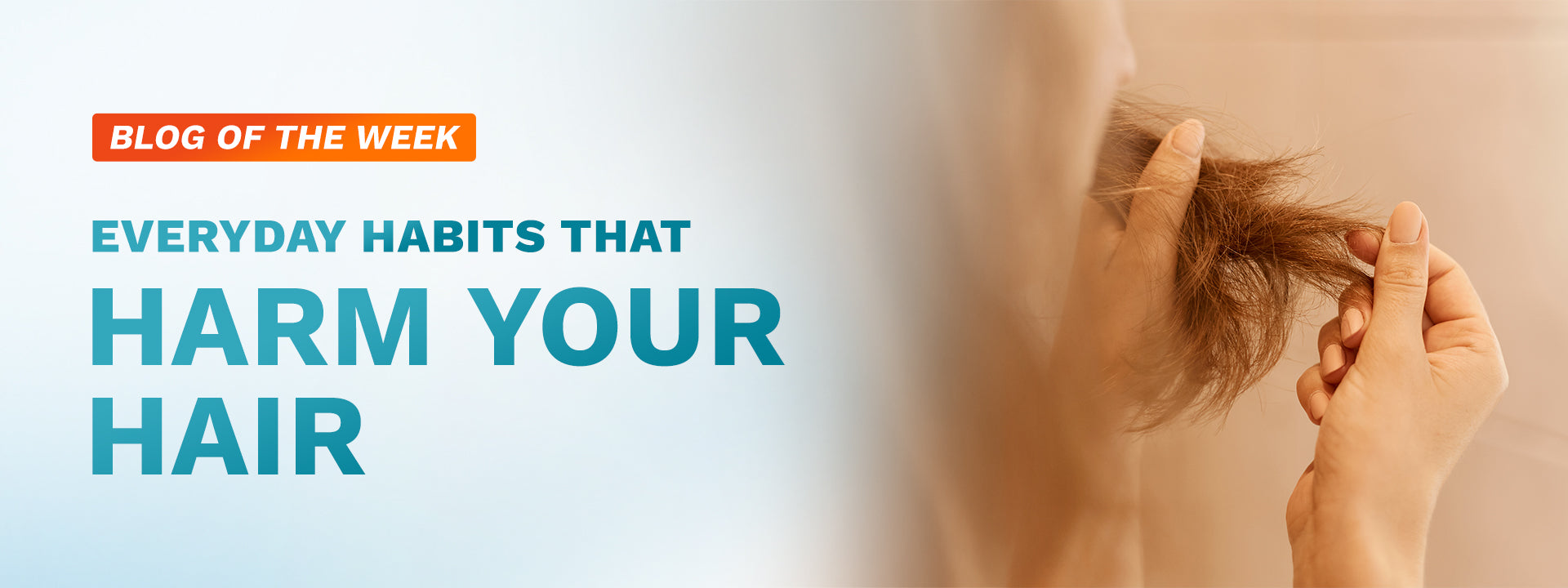
Heat damage from straighteners and blow dryers denatures the keratin proteins in the hair cortex and permanently disrupts the cuticle structure. This damage cannot be "reversed". The chemistry is irreversible. What treatment does is manage the effects: smoothing the roughened cuticle surface with conditioning lipids and polymers, filling protein gaps with hydrolysed keratin or amino acids, and sealing the surface to reduce ongoing moisture loss. An argan oil-rich hair mask applied weekly provides the lipid layer the damaged cuticle needs to feel smoother, behave better, and break less.
What Heat Actually Does to Hair?
The hair shaft consists of a cortex of alpha-keratin protein bundles held in structure by disulphide bonds and hydrogen bonds, surrounded by a cuticle of overlapping cells. High temperatures begin to disrupt hydrogen bonds and can cause irreversible keratin denaturation and cuticle lifting.
The visual signs of heat damage are direct consequences of this chemistry: split ends (cortex splitting where cuticle is destroyed), rough texture (raised, broken cuticle), excessive frizz in humidity (porous hair absorbs water unevenly), and increased breakage under mechanical stress (combing, tying). Heat damage also increases hair's porosity, meaning it absorbs and loses moisture faster, leading to chronic dryness.
How Treatment Helps Without Reversing Damage?
While the underlying protein denaturation cannot be undone without cutting, treatments can significantly improve the practical appearance and behaviour of heat-damaged hair by:
- Filling cuticle gaps with hydrolysed keratin (small protein fragments) that temporarily adhere to exposed cortex, making the surface smoother.
- Depositing conditioning lipids (argan oil, camellia oil) that mimic the F-layer (the natural outer lipid coat of healthy hair) to reduce surface friction and moisture loss.
- Reducing hygral fatigue, the stress of repeated swelling and drying from water absorption, by providing a more uniform moisture exchange surface.
Why Argan Oil Is Particularly Effective for Heat-Damaged Hair?
Argan oil is rich in oleic acid and linoleic acid with a high Vitamin E (tocopherol) content. Its fatty acid profile has good cuticle affinity, depositing on the cuticle surface and in the cuticle gaps, reducing surface roughness and friction. Vitamin E provides antioxidant protection that slows ongoing oxidative damage to the cortical proteins from UV and pollution exposure.
Pilgrim's Argan Oil Hair Mask
Pilgrim Argan Oil Hair Mask combines argan oil with White Lotus extract and Camellia oil in a deep conditioning mask. Apply to clean, towel-dried hair from mid-lengths to ends (avoid the scalp to prevent buildup), leave for 10 to 15 minutes, and rinse thoroughly. Use once weekly for maintenance; twice weekly for severely damaged hair.
The Camellia oil (Camellia sinensis seed oil) has a lighter molecular profile than argan and penetrates the cuticle more readily, while argan provides surface conditioning. The combination addresses both sub-surface penetration and surface-level smoothing.
Frequently Asked Questions
Can heat damage be repaired permanently?
No. The protein denaturation and cuticle structural damage from high heat cannot be chemically reversed. What hair masks and treatments do is manage the surface and reduce ongoing deterioration. The only way to remove heat-damaged length is to cut it.
How often should I use a deep conditioning mask?
Once weekly for mildly damaged hair. Twice weekly for severely damaged or chemically processed hair. Using a mask more frequently than necessary can cause product buildup that weighs the hair down.
What is the maximum safe temperature for hair styling?
Use a lower heat setting for fine hair and a higher setting for coarse or thick hair, always with a heat protectant applied. A heat protectant creates a polymer barrier before styling. Without it, even moderate heat can cause progressive damage.
Is argan oil better than coconut oil for hair?
For heat-damaged hair, argan oil is typically better. It deposits on the surface and reduces friction without the heavy penetration of coconut oil, which can cause protein overload in already-stressed hair. Coconut oil is better for healthy hair maintenance.
Can I use a hair mask if I have an oily scalp?
Yes. Apply only from mid-lengths to ends, not to the scalp. The scalp produces its own sebum and does not need the additional lipids from a mask; applying mask to the scalp causes buildup and can worsen oiliness.